

Glass Railing Lahore: A Complete Guide to Types, Costs, and Choosing the Right System
A glass railing doesn’t just look good — it changes how a space feels. Rooms feel larger. Views become the feature. A staircase that was functional becomes architectural.
Request a QuoteChoosing the Right System
But choosing the wrong system costs you twice: once to install, and once to fix. If you’re researching glass railings right now, you’re probably dealing with a mix of options you’re not sure how to compare. Frameless or framed? Tempered or laminated? Premium quote or budget quote — and what’s the actual difference?
These are the right questions. The problem is most guides answer some of them, not all. This guide covers everything you need to make a confident decision — system types, glass options, real cost drivers, safety standards, maintenance, and the exact questions to ask any installer before you sign off on a project.
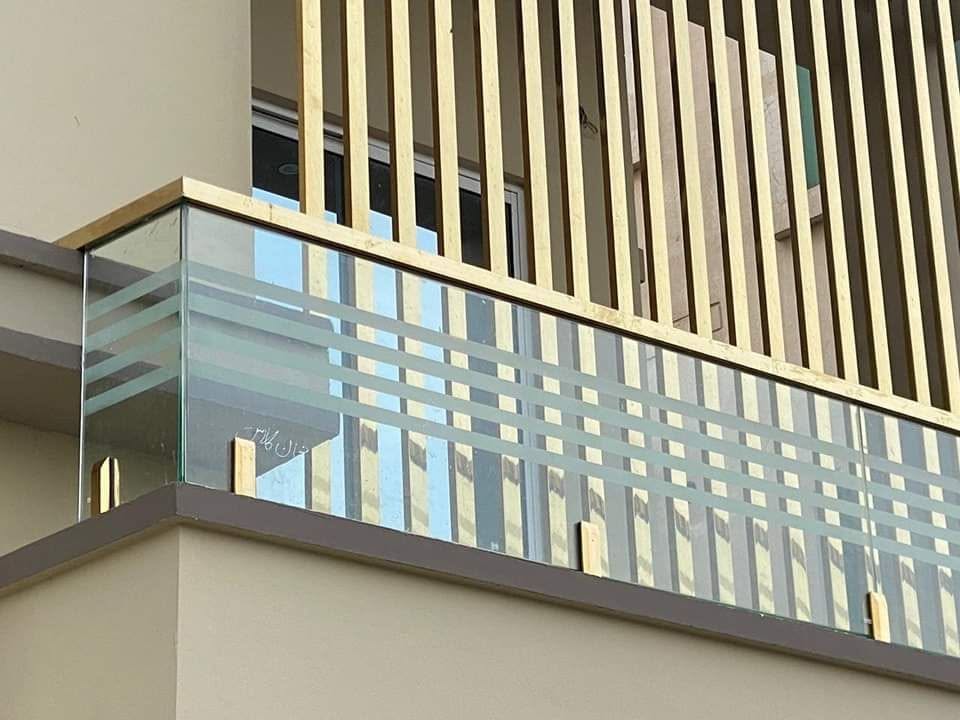
What Is a Glass Railing?
A glass railing is a safety barrier system that uses glass panels as the primary infill material, supported by hardware, posts, or channels depending on the system type. The result is a barrier that provides protection — on a staircase, balcony, or deck — without blocking light or sightlines.
How a Glass Railing System Works
Every glass railing has three core components: the glass panels themselves, the mounting hardware that holds them in place, and the supporting structure they’re attached to. The hardware varies significantly by system — spigots, base shoes, standoffs, or full frame posts — and this is what determines how the railing looks and how it performs.
The complexity of assembly ranges from straightforward framed kits to precision-engineered frameless systems that require exact site measurements and structural anchoring. Understanding this range is what stops buyers from comparing prices that aren’t actually comparing the same thing.
Where Glass Railings Are Installed
Glass railings work across a wide range of applications. The most common are staircases (both residential and commercial), balconies and terraces, outdoor decks, pool surrounds, mezzanine floors, and commercial lobby spaces. Each installation context has its own structural requirements — outdoor systems need weather-rated hardware and wind load calculations; indoor staircases have different height and load specifications. The context shapes the correct specification, not just the aesthetics.
Frameless, Semi-Frameless, or Framed?
Most of the confusion in glass railing research comes from conflating three systems that look vaguely similar but perform — and cost — very differently. Here’s how they actually compare.
Frameless Glass Railing
Frameless systems eliminate visible posts and top rails entirely. Glass panels are secured using concealed hardware — typically stainless steel spigots anchored into the floor or base shoes running along the bottom edge. To work without a frame carrying the structural load, frameless systems require thicker glass — typically 10mm to 12mm toughened safety glass.
Framed Glass Railing
Framed systems use aluminium or steel posts and a top rail to hold glass panels in place. The frame carries the structural load, which means the glass acts as a safe, transparent infill rather than a load-bearing element. That’s why framed systems can use standard glass thickness — and why they cost considerably less.
Semi-Frameless
Semi-frameless systems sit in the middle. Posts are installed at intervals — typically every 900mm to 1,200mm — but without a continuous top rail. Panels sit between posts with no rail closing the top. The result is cleaner than a framed system, more affordable than a fully frameless one.
| System Type | View Quality | Relative Cost | Glass Thickness | Best Use Case |
|---|---|---|---|---|
| Frameless | Unobstructed | Premium | 10–12mm minimum | View balconies, high-end interiors |
| Semi-Frameless | Largely clear | Mid-range | 8–10mm | Outdoor decks, residential balconies |
| Framed | Good, with visible posts | Budget-friendly | 6–8mm standard | Cost-managed projects, traditional homes |
The system type is the biggest single cost driver. Everything else follows from this one decision.
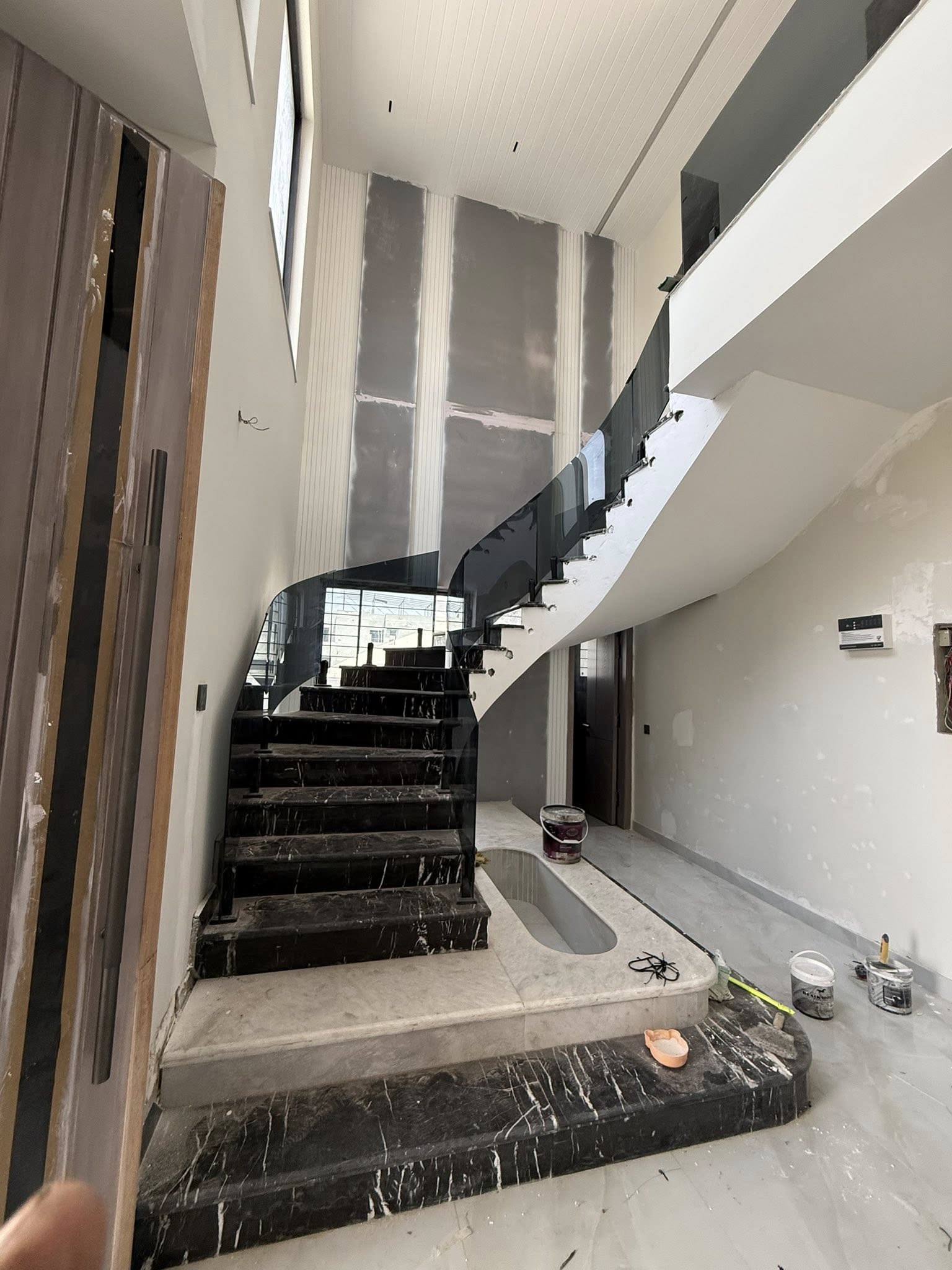
Are Glass Railings Actually Safe?
Yes — when correctly specified and properly installed, glass railings are among the safest barrier options available. The solid panel design eliminates the gaps present in traditional baluster railings. Children can’t fall through, get limbs caught, or use gaps as footholds to climb.
What the Building Code Requires
Most regulations specify a minimum railing height of 900mm for staircases and 1,100mm for balconies. The railing must also resist a concentrated lateral load. Glass thickness minimums are defined by system type: typically 6mm for framed systems and 10mm minimum for frameless systems where the glass itself provides the structural resistance.
In practice, the most common causes of damage are not structural impact but improper installation — wrong glass thickness or inadequate expansion allowance for temperature changes. A well-specified railing rarely fails in service.
How Much Does Glass Railing Cost?
What Drives the Cost?
The system type is the primary driver. Frameless systems cost more because they require thicker glass, premium hardware, and precise installation. Site complexity can add cost invisibly—a straight run on a concrete deck is straightforward, but a curved balcony or uneven substrate adds time and cost.
Framed systems: Accessible end of the market. Reliable performance.
Semi-frameless: Mid-range. Best balance of aesthetics and cost.
Frameless: Premium end. The result justifies the investment for the right application.
Where People Overspend
1. Specifying frameless for a space where the view doesn’t justify it. An enclosed staircase pays a premium price for an aesthetic benefit the setting can’t deliver.
2. Choosing the lowest quote without checking certification. Non-compliant glass is a safety risk and a liability—it is the most expensive outcome in the long run.
Maintenance: Keeping it New
Glass railings require less maintenance than timber or steel—no painting or rust treatment. What they do need is regular cleaning, as glass shows dust and fingerprints more visibly than opaque materials.
Routine Cleaning
A mild soapy solution and a microfibre cloth handles routine cleaning. Avoid abrasive cleaners—surface scratches on tempered glass are permanent. For outdoor panels, use distilled water for the final rinse to prevent the white haze from hard-water spotting.
Hardware and Frame Care
Stainless steel and powder-coated aluminium require minimal attention—a damp cloth is sufficient. More importantly: check the tightness of spigots and clamp hardware once a year. Glass panels shift very slightly with thermal expansion. A loose fastener is a safety issue before it becomes an aesthetic one.
The Right System for the Right Space
Glass railing works when the correct specification meets the right application. Request a consultation below.