

Frameless Mirrors — Custom Cut & Installed in Pakistan
“Frameless” promises something specific: an edge so clean it looks like the glass simply ends, no border pulling attention away from the reflection itself. Done well, that’s exactly what you get. Done cheaply, it looks like a mirror that’s missing its frame — rough edges, visible sealant, fixings that were never meant to be seen.
The difference is entirely in the execution. Our frameless mirrors are custom cut, properly edge-finished, and mounted so the fixings disappear — across bathrooms, hallways, wardrobes, and studio walls. For larger architectural projects, these mirrors match the same high-quality standards as our Custom Wall Mirrors in Lahore.
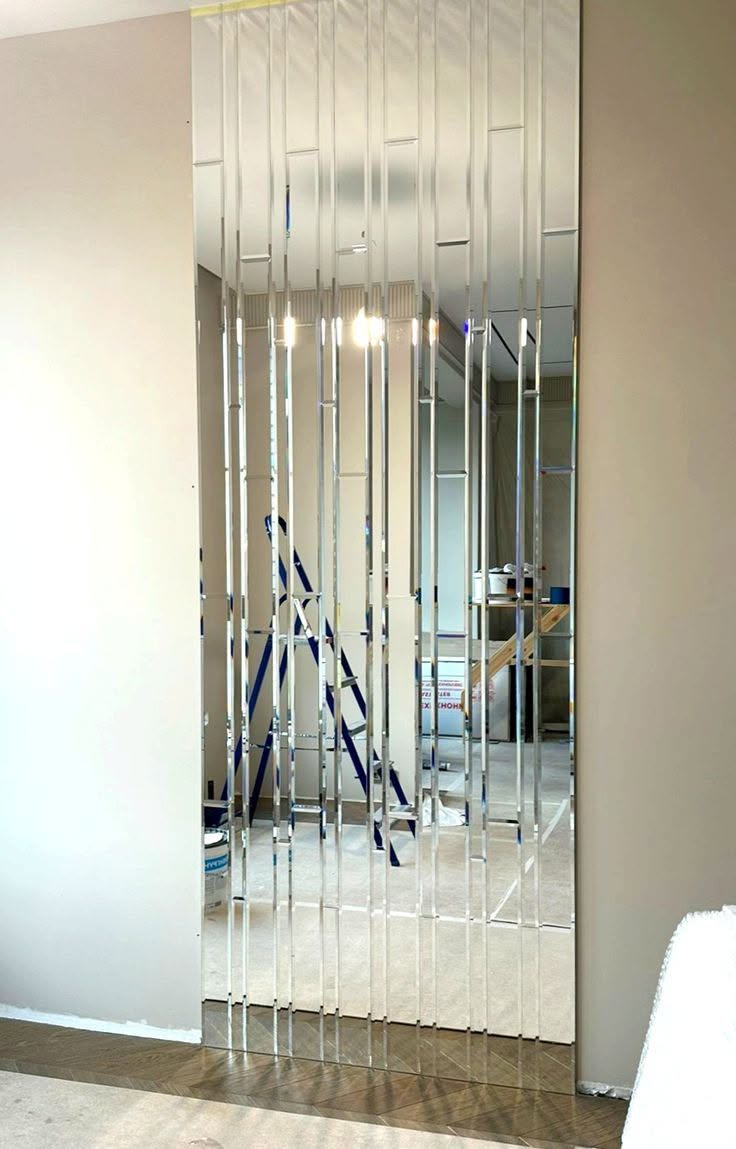
What “Frameless” Actually Means
No frame doesn’t mean no finishing. A frameless mirror still has its edges cut and treated — polished, bevelled, or rounded, depending on the look you want. The frame is absent; the edge work isn’t. That distinction is exactly where cheaper suppliers cut corners, leaving a raw or unevenly ground edge instead of a properly finished one.
Edge Finishes That Make the Difference
Polished Flat Edge
A flat polished edge holds a clean 90-degree line, ground and buffed smooth. It’s the most minimal option — no visible angle, no rounding, just a sharp, finished glass line.
Bevelled Edge
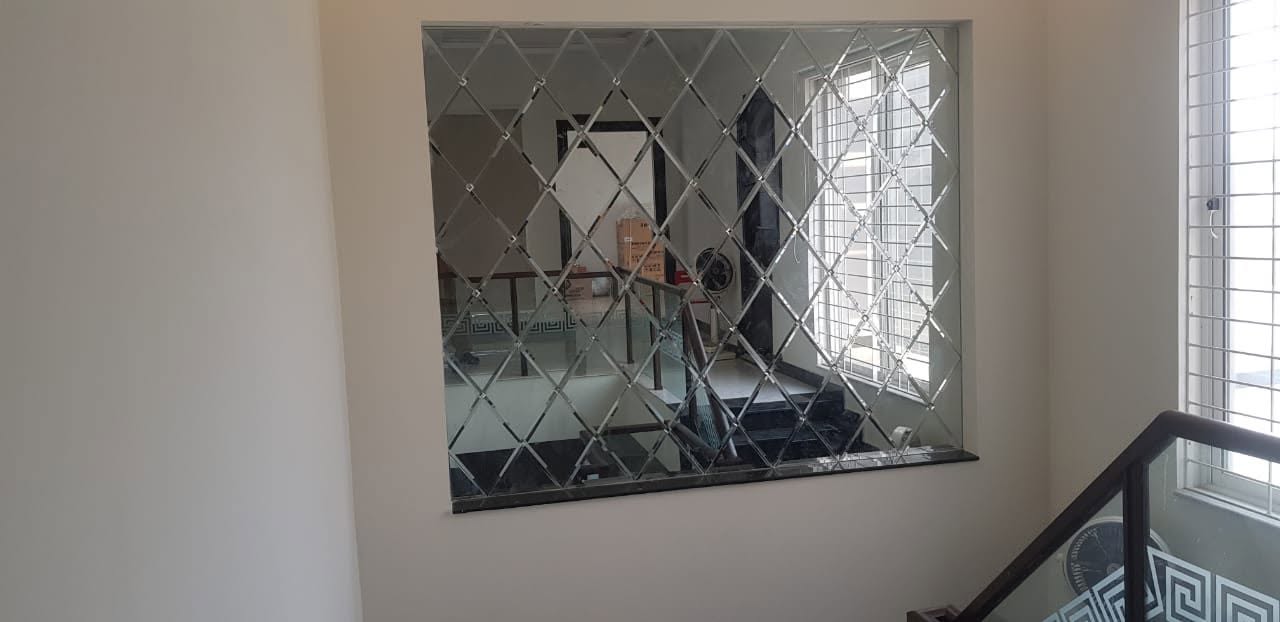
A bevelled edge is cut at an angle along the border of the glass, catching light in a way a flat edge doesn’t. It softens the line between mirror and wall and reads as more decorative without adding a frame.

Pencil Edge
A pencil edge is gently rounded rather than sharply cut — a safer profile, especially useful in family bathrooms or high-traffic commercial spaces where a sharp glass edge is a genuine hazard.
How Frameless Mirrors Are Mounted
Here’s the part that separates a good frameless install from a bad one: there’s no frame to hide the fixing. Everything has to be deliberate.
Adhesive Mounting
Smaller, lighter panels are mounted with structural adhesive rated specifically for glass-to-wall bonding — not general-purpose glue, which won’t hold long-term or bond safely with a mirror’s reflective backing.
Discreet Clip Mounting
Larger panels need mechanical support. Mounting clips are positioned along the edge or back of the glass so they stay visually minimal once fitted — supportive without becoming part of the look. This method is essential for high-impact areas like Gym Mirrors.
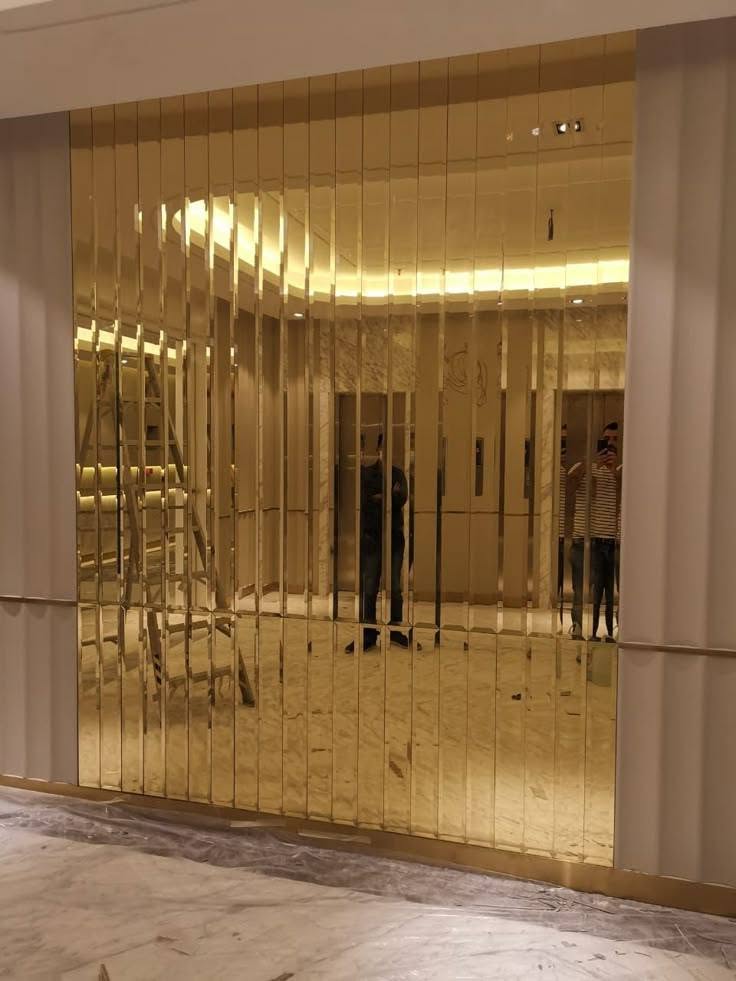
Sealing the Edges
In wet areas, the edges are silicone-sealed to stop moisture working behind the glass. Skip this step and a mirror in a humid bathroom will eventually show dark edge staining where damp has crept in.
Frameless vs. Framed — And Where Each Wins
Where Frameless Makes Sense
Modern bathrooms, minimalist interiors, and commercial or studio settings tend to favor frameless — it reads as clean and current, and it’s easier to keep spotless since there’s no frame edge to trap grime. It is the gold standard for our Bathroom Mirrors collection.
When a Frame Still Wins
Traditional interiors, or spaces where the mirror will take years of wear, sometimes suit a frame better — it hides small chips at the edge that would otherwise show on bare glass.
Are Frameless Mirrors Durable and Safe for Wet Areas?
Frameless mirrors use the same Toughened Glass technology as framed ones — the frame was never what made a mirror durable. What actually determines durability is the edge finish and the sealing. A properly polished edge and correctly silicone-sealed mount hold up in bathrooms and humid spaces just as well as any framed alternative.
Frequently Asked Questions
What does “frameless” mean for a mirror?
It means the mirror has no border or frame, but the edges are still professionally finished (polished or bevelled) rather than left raw.
What edge finishes are available for frameless mirrors?
We offer flat polished edges for a sharp line, bevelled edges for a decorative angled look, and rounded pencil edges for safety.
How are frameless mirrors mounted without a frame?
We use structural glass-rated adhesive for smaller mirrors and discreet mechanical clips for larger, heavier panels.
Are frameless mirrors suitable for bathrooms and wet areas?
Yes, provided the edges are properly silicone-sealed to stop moisture from reaching the reflective backing and causing staining.
A frameless mirror only looks effortless when the edge work and mounting are done properly — that’s the entire craft of it, not an afterthought. Send us your measurements and we’ll cut, finish, and install a frameless mirror that actually holds up to that clean look.